

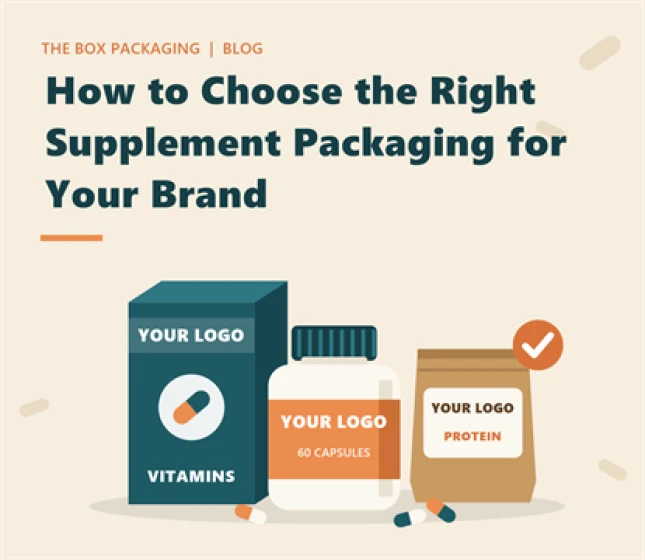
How to Choose the Right Packaging for Your Supplement Brand
Launching a supplement brand means making a hundred decisions at once: the formula, ingredients, label, price and marketing plan. Packaging often gets pushed to the end of that list, and that's a mistake.
Your packaging isn't just a container. It keeps the product fresh, it's the first thing a customer picks up, and it does a lot of the work of convincing them your brand is legitimate. A new supplement in well-made packaging can look like it's been around for years. A great formula in a cheap-looking tub can look like a gamble.
You have more options now than ever, including bottles, jars, stand-up pouches, Mylar bags, printed cartons and premium gift boxes. The trick is finding the one that fits your product, not just the one that looks nice.
Why packaging matters so much for supplements
Supplements are more delicate than people think. Moisture makes powders clump. Oxygen can break down sensitive ingredients, and light and heat can do damage too. The package is the only thing standing between your formula and all of that.
Then there's trust. Picture two similar products side by side, on a shelf or on Amazon. One has a plain generic label. The other has clean design, clear information and a brand you can recognize. Most people reach for the second one before they've read a single ingredient.
So good supplement packaging has to do four things at once: protect, function, look right and make financial sense.
Start with the product, not the design
What format are you selling?
This decides almost everything else.
Capsules and tablets usually go in bottles, jars, blister packs or cartons.
Powders suit tubs, stand-up pouches, sachets and flexible bags.
Gummies need protection from heat and humidity so they don't fuse into one big lump.
Liquids need the right bottle and closure, such as a dropper, pump or specialty cap.
Work out what the product physically needs first. The design comes after.
How much protection does it need?
Ask yourself what could damage your formula:
Moisture: clumping powders, softening tablets
Oxygen: oxidation in sensitive ingredients
Light: degradation in light-sensitive formulas
Heat: melting or sticking gummies
If any of these apply, look at barrier materials. Laminated films, foil-lined structures and other high-barrier materials exist for exactly this. Your formulator or manufacturer can usually tell you what level of protection the product needs.
Supplement pouches: light, practical and great for branding
Flexible packaging has taken over a big chunk of the supplement market, especially for powders sold online. It's easy to see why:
They're lightweight, so shipping costs less and there's less bulk.
They store flat before filling, which saves warehouse space.
Stand-up pouches have a big front panel for your logo, flavor and key info.
Resealable zips let customers scoop a serving and close the bag again. No need to tip it into another container.
If you sell protein, greens, pre-workout, collagen or electrolyte mixes, a custom pouch is a serious alternative to a rigid tub.
When do Mylar bags make sense?
Mylar bags are the go-to when you want flexible packaging with strong barrier protection. They're a good fit for:
Protein powder and creatine
Pre-workout and electrolyte mixes
Collagen
Greens and superfood blends
Herbal powders
When they're built properly, Mylar bags do a solid job of keeping out moisture, air and light. You can also customize the size, finish, print and closure, so they still look like your brand and not a generic bulk bag.
Custom supplement boxes: an extra layer of presentation
Your bottle or pouch is the primary packaging. A printed box around it is the secondary packaging, and it's often where a product goes from "fine" to "premium."
Boxes are especially useful for:
High-end supplements and wellness products
Gift sets and bundles
Subscription boxes
Products sold in retail stores
A box gives you much more space for your story, benefits, directions and branding. The same bottle feels noticeably more upmarket when it comes out of a well-printed carton.
Designing packaging that actually works
Make the important stuff obvious
Supplement shoppers scan quickly. Within a couple of seconds they should be able to tell:
Who makes it (brand)
What it is (product name and type)
The key details (flavor, servings, count)
Everything else can live on the back and sides.
Don't cram the front panel
This is one of the most common mistakes new brands make. They try to fit every benefit, badge and claim on the front. The result looks cluttered and cheap. A cleaner front almost always looks more premium.
Stay consistent across your range
Use the same fonts, colors and imagery as your website. If you launch five products, a customer should be able to look at them and know straight away they're from the same family. Change the accent color or graphics for each product, but keep the overall look the same.
Check your labeling requirements
Supplements come with labeling rules in most markets, including in the U.S. Make sure your layout leaves room for everything legally required, and have the final label checked before you print. Reprinting an entire run because something's missing hurts.
Stock packaging or custom packaging?
Stock packaging is a sensible way to start. Use standard bottles, jars or pouches with custom labels, or add a printed box around them. It keeps your upfront costs low while you find out what sells.
Custom packaging makes more sense as you grow. You control the size, material, print, finish and closure, and you get packaging that doesn't look like everyone else's. In crowded categories like vitamins, protein and sports nutrition, standing out is a big deal.
A lot of brands do both. They launch with stock containers and labels, then move to fully custom packaging once sales pick up.
Choosing the right material
Paperboard is the most popular option for supplement boxes. It's light, prints beautifully and works well as an outer carton for bottles, jars and sachets.
Corrugated board is mainly for shipping. If you sell direct to customers, a well-sized branded mailer protects the product in transit and adds to the unboxing.
Flexible laminates are what pouches and bags are made from. They combine barrier protection, flexibility and a great print surface, and they take up much less space than rigid tubs.
Rigid boxes are for the premium end, such as gift sets, launch kits, influencer boxes and luxury wellness lines.
Packaging by product type
Protein powder: You need moisture protection and easy access. Think about how people scoop it, reseal it and store it. Large stand-up pouches and tubs are the usual choices.
Vitamins: Bottles or jars are standard, and a carton adds room for branding and information. Custom vitamin packaging helps keep a whole range of formulas and strengths looking unified.
Gummies: Protect them from heat and humidity. Bottles, jars and cartons all work, depending on your brand and price point.
Powdered supplements in general: Moisture protection plus easy dispensing. Resealable pouches are hard to beat for products people use every day.
Think about the customer at home
Packaging can look amazing and still be annoying to use. Run through the real-life questions:
Is it easy to open?
Does it reseal properly?
Can you scoop or pour without making a mess?
Will it fit in a kitchen cupboard or a gym bag?
These sound small, but they shape how people feel about your product every single day they use it.
Sustainability without the greenwashing
Customers do care about packaging waste. But being more sustainable doesn't have to mean paying for the priciest eco material on the market. Start with the basics:
Can you remove a component you don't really need?
Can you use less material overall?
Can you choose recyclable materials where they suit the product?
Can you make the package smaller, so you ship less air?
Paper-based boxes are an easy win for brands that want more recyclable packaging in their presentation. Just make sure any environmental claims match the actual materials. Don't use "eco" as a slogan if the packaging doesn't back it up.
How much does supplement packaging cost?
There's no flat price, because it depends on several things:
Material and structure
Size
Printing method and number of colors
Finishes and inserts
Level of customization
Order quantity
Where it's being shipped
Bigger orders usually bring the price per unit down. Smaller runs cost more per piece but tie up less cash. For a new brand, starting practical and upgrading as volume grows is usually the smart move.
Our MOQ is just 100 boxes and we provide free shipping and free design support on all new orders.
Why work with a packaging partner?
The right supplier does more than print what you send. A good packaging company will help you compare materials, sizes, print options and structures before anything goes into production, so you're not guessing.
At The Box Packaging, we make packaging that fits your product, not the other way round. Whether you need custom supplement boxes, printed cartons, mailer boxes or pouches, we'll help you find a setup that protects your formula and looks the part. If you don't have a designer, our team can help turn your idea into print-ready artwork.
Quick checklist before you order
What format is it? Capsules, tablets, powder, gummies or liquid.
Is it protected? Think about moisture, oxygen, light, heat and shelf life.
Is it easy to use? Opening, dispensing, resealing and storing.
Does it look like your brand? And will your target customer like it?
Will it survive shipping? Normal handling shouldn't damage it.
Does it fit your budget? Include setup, storage, shipping and minimums, not just the unit price.
Will it scale? What works for 500 units might not be the best deal at 50,000.
Final thoughts
Choosing supplement packaging isn't about picking the prettiest container. It has to protect what's inside, be easy to use, represent your brand and make sense for your margins.
Most growing brands follow the same path. They start with stock containers and good labels, then move into custom pouches, printed cartons and branded boxes as the business takes off. There's no wrong place to start, as long as the packaging suits the product.
If you're ready to package your supplement properly, get in touch with The Box Packaging. Tell us what you're making, and we'll help you work out the size, material, print and finish that fit it best.