

The Real Art of Sealing and Printing on Mylar Bags: A Comprehensive Guide
Have you ever opened a bag of food that was supposed to be fresh, only to find that the product had lost its flavor, texture, or aroma? For businesses that package food, this isn't just disappointing; it can affect customer satisfaction and the way people perceive the brand. Good packaging does much more than make a product look attractive. It helps protect what is inside, preserve quality, and give customers confidence in what they are buying.
This is one of the reasons Mylar bags have become such a popular packaging option. Made from polyester film and commonly combined with barrier layers such as aluminum foil, Mylar packaging can provide excellent protection against moisture, light, oxygen, and other environmental factors when the right material structure is selected. They are used for everything from coffee and tea to snacks, dried foods, pet treats, and other products that benefit from protective packaging.
But choosing a Mylar bag is only part of the process. If you want the packaging to perform properly, you also need to understand how to seal it, how it can be printed, and which finishing options make sense for your product.
Let's take a closer look.
Why Properly Sealing Mylar Bags Matters
A Mylar bag can provide a strong barrier, but the quality of the seal is just as important as the material itself. Even a high-quality pouch can lose its protective properties if the top is not sealed correctly.
For food businesses, an incomplete or weak seal can allow air or moisture to enter the package. Depending on the product, that may lead to loss of crispness, flavor, aroma, or overall quality. A good seal, on the other hand, helps keep the package closed throughout handling, transportation, and storage.
Heat sealing is one of the most common ways to close Mylar bags. The process uses controlled heat and pressure to bond the appropriate layers of the pouch together. The exact temperature, sealing time, and pressure depend on the material construction and the equipment being used, which is why it is important to follow the recommendations of the bag and heat-sealer manufacturer.
What Do You Need to Seal a Mylar Bag?
The good news is that you don't need a complicated setup for basic heat sealing. The essentials are fairly straightforward.
You'll need a suitable Mylar bag, a heat sealer, and, when appropriate for the product and storage method, oxygen absorbers or other suitable packaging components.
The bag itself should be appropriate for the product you are packaging. Not every Mylar pouch has the same barrier properties, thickness, or construction. A pouch designed for dry snacks may not be the right choice for every type of food product, so material selection should always come first.
For sealing, an impulse heat sealer is commonly used for many Mylar pouch applications. Commercial operations may use more advanced packaging equipment depending on production volume and the type of pouch being used.
If you're new to heat sealing, it is worth practicing before you package your finished products. A few test seals can help you determine whether your settings are producing a consistent closure.
How to Seal Mylar Bags Properly
Start by making sure the product and the inside of the bag are clean and dry. When you're packaging food, avoid getting crumbs, oils, or product particles into the area that needs to be sealed. Anything caught between the sealing layers can interfere with the quality of the closure.
Fill the pouch while leaving enough space at the top for sealing. Overfilling makes it difficult to create a flat sealing area and can place unnecessary pressure on the closure.
Before using the heat sealer, straighten the top of the pouch so that the material lies flat. Position the opening correctly in the sealer and use the recommended settings for the particular pouch construction.
After sealing, give the seal time to cool and set. Then inspect it carefully. The seal should be continuous and free from obvious gaps, wrinkles, channels, or areas where the layers have failed to bond properly.
If the seal looks questionable, don't assume it will hold. It's better to correct the problem before the package leaves your facility.
For commercial products, sealing should also be validated as part of your packaging and quality-control process rather than relying only on a quick visual inspection.
Oxygen Absorbers: Are They Always Necessary?
Oxygen absorbers are often associated with Mylar food storage, particularly for long-term storage of suitable dry foods. They work by reducing the oxygen remaining inside a properly sealed package.
However, they are not automatically appropriate for every food product or packaging application. Their suitability depends on factors such as the food's moisture content, storage conditions, packaging structure, and intended shelf life.
If you're a food business, it's important to determine the appropriate preservation and packaging method for your specific product rather than simply adding an oxygen absorber because you've seen it recommended online.
For commercial food products, shelf-life testing and appropriate food-safety guidance should be part of the process.
Mylar Bags Have Uses Beyond Food Storage
Although Mylar bags are strongly associated with food storage, their applications go well beyond the pantry.
Their barrier properties and flexible construction make them useful for packaging and protecting a variety of products. Depending on the material structure and intended application, they can be used for products such as coffee, tea, snacks, herbs, spices, pet treats, and other dry goods.
They are also used in certain non-food applications where protection from moisture, light, oxygen, or environmental exposure is important.
For businesses, the appeal is particularly clear. A flexible pouch can take up less storage space than a rigid container, while custom printing allows the package to become part of the brand presentation.
Printing on Mylar Bags Is a Little Different
Now we come to the part that many business owners are curious about: printing.
Mylar's smooth, non-porous surface can make printing more demanding than printing on absorbent materials such as paper. The ink or coating has to adhere properly to the surface, and the printing process needs to be compatible with the specific film and laminate structure.
For that reason, commercial Mylar packaging is usually printed using professional packaging processes rather than a standard home or office printer.
The best printing method depends on factors such as order quantity, artwork complexity, number of colors, desired appearance, and production requirements.
Flexographic Printing for Larger Runs
Flexographic printing is widely used in flexible packaging and can be a practical option for larger production runs. It uses flexible printing plates and can produce consistent graphics at commercial volumes.
For brands ordering larger quantities of pouches, flexographic printing can offer an efficient way to reproduce logos, patterns, product information, and other artwork across a large run.
It is particularly useful when your design is established and you're producing the same packaging consistently.
Digital Printing for Shorter Runs and Detailed Designs
Digital printing can be attractive to smaller or growing brands because it generally does not require traditional printing plates. This can make it more flexible for shorter production runs and designs that may change frequently.
It can also be useful when your artwork contains detailed graphics, photographs, gradients, or multiple colors.
For a new food brand testing different products or designs, digital printing may provide the flexibility to experiment without immediately committing to extremely large quantities.
Gravure Printing for Premium Packaging
Gravure printing is another option used for high-quality flexible packaging. It uses engraved cylinders to transfer ink to the film and is known for producing detailed, consistent imagery.
It is generally associated with high-volume production because of the setup involved, but for brands producing large quantities of premium packaging, the resulting print quality can be worth considering.
The important thing is not to choose a printing process simply because it sounds impressive. Your packaging supplier should help you select a method based on your actual volume, budget, artwork, and product requirements.
The Finishing Touch Can Change the Entire Look
Printing creates the design, but finishing can determine how that design feels in the customer's hands.
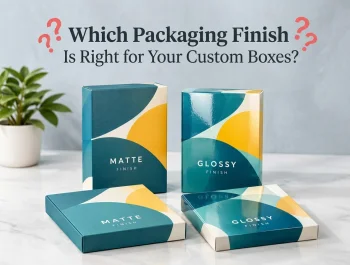
A matte finish can give a pouch a softer, more understated appearance, while a gloss finish can make colors appear brighter and create a more reflective surface. Neither is automatically better; the right choice depends on your brand and the look you're trying to achieve.
Some brands also use metallic or holographic effects to draw attention to particular elements of the design. These effects can work especially well for products positioned as premium, fun, or visually distinctive.
You can also customize the pouch itself. Different sizes, shapes, closures, tear notches, windows, and other structural features can be considered depending on the product and packaging requirements.
The trick is knowing when enough is enough. Adding every available feature doesn't necessarily make packaging better. The strongest packaging designs usually have a clear reason behind each element.
Good Packaging Starts With Good Artwork
Before sending artwork to a packaging manufacturer, make sure the design has been prepared for the actual pouch dimensions and printing process.
Pay attention to the dieline, safe areas, bleeds, folds, seals, and other structural considerations. Text should remain readable, important information shouldn't be positioned where it could be affected by seals or folds, and images should be supplied at an appropriate resolution.
This may sound technical, but getting these details right early can save considerable time later.
A beautiful design that doesn't account for the physical structure of the pouch may look completely different once it is manufactured.
Don't Forget About the Product Inside
It's easy to become focused on colors, graphics, finishes, and logos and forget the most important part of packaging: the product.
Your pouch needs to be appropriate for what you're selling.
Coffee may require different barrier considerations than dried fruit. Pet treats may have different packaging requirements from powdered products. Moisture-sensitive products may need a different structure from products that are relatively stable.
This is why choosing packaging based solely on appearance can be a mistake.
A good packaging decision considers product protection, shelf life, storage, transportation, customer experience, branding, and cost together.
Test Before You Commit to a Large Production Run
One of the best things a business can do before placing a large packaging order is test.
Request samples where possible and evaluate the pouch with your actual product. Check how it looks, how it handles, how it seals, and whether the finished package feels right for your customers.
If you're using heat sealing equipment, test different settings according to the manufacturer's recommendations and check the consistency of the resulting seals.
You can also use the testing stage to review your artwork. Sometimes a color that looked perfect on a computer screen behaves differently on the actual packaging material. A sample gives you an opportunity to identify problems before they become expensive production mistakes.
Choosing the Right Mylar Packaging Partner
There is a lot more to Mylar packaging than simply choosing a pouch and uploading a logo.
The right packaging partner should be able to help you think through the material, dimensions, printing process, finishing options, and production requirements. They should also understand that every product and every brand has different needs.
At The Box Packaging, we help businesses create custom packaging designed around their products and branding. From custom printed Mylar bags and pouches to different finishes and structural options, our goal is to help you find a solution that looks good while remaining practical for your product.
Whether you're launching a new snack brand, packaging coffee or tea, selling pet treats, or developing another product that requires flexible barrier packaging, the right pouch can become an important part of your overall brand experience.
Final Thoughts
There is a reason Mylar bags continue to be popular among businesses and consumers. They are flexible, lightweight, customizable, and can provide strong barrier protection when the appropriate material structure is selected.
But the bag itself is only one piece of the puzzle.
A reliable seal protects the package after filling. The right printing process brings your branding to life. A suitable finish gives the pouch its visual character. And careful material selection helps ensure that the packaging is appropriate for the product inside.
For businesses, the best packaging isn't necessarily the one with the most features. It is the one that does its job properly while giving customers a reason to remember the brand.
That is the real art of Mylar packaging: finding the balance between protection, presentation, practicality, and cost.
If you're ready to explore custom Mylar bags for your product, The Box Packaging can help you turn your packaging idea into a finished pouch designed around your brand.