

Think about the last time you received an online order. Before you even saw the product, you probably noticed the packaging. Was the box easy to open? Did the product arrive in good condition? Did the packaging feel like it belonged to the brand?
These small details can shape how customers feel about a purchase.
For e-commerce businesses, packaging has two important jobs: protecting products during delivery and giving customers a good first impression. A mailer box can help with both. It is designed for shipping products securely, and its printable surfaces give businesses room to add their logo, brand colors, and other design elements.
But what is a mailer box, exactly? What makes it different from a regular shipping box, and which type should your business choose?
In this guide, we will explain how mailer box packaging works, explore its common types and benefits, and share practical tips for choosing the right size, material, and design for your products.
What is a mailer box?
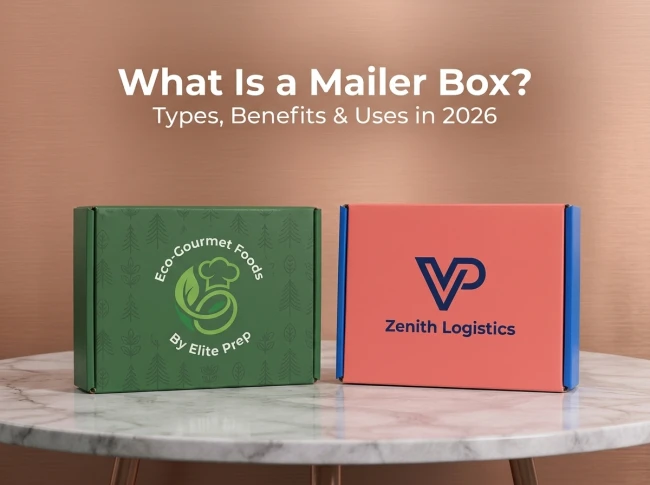
A mailer box is a packaging box designed to hold and ship products, usually with a folding lid and interlocking flaps that help keep the box closed. It is commonly made from corrugated cardboard or paperboard, depending on the product and the level of protection required.
Unlike a conventional shipping carton that may need packing tape to secure its flaps, many mailer boxes use a self-locking structure. This makes them convenient to assemble, pack, and close.
Mailer boxes are popular with online stores, subscription services, cosmetics brands, clothing retailers, and businesses that want their packaging to look professional when it reaches the customer.
They are also highly customizable. You can print a company logo on the outside, add a message inside the lid, or use inserts to keep individual products in place.
For example, a skincare business might use a printed mailer box with separate compartments for bottles and jars. A clothing brand could choose a lightweight box with a simple logo and tissue paper. The packaging changes according to the product, but the purpose stays the same: to deliver the order safely and present it well.
How does a mailer box work?
Most folding mailer boxes arrive flat, which helps reduce the space needed for storage. When an order is ready, the packing team folds the box into shape, places the product inside, closes the lid, and secures it according to the box's design.
A typical mailer box has:
A folding lid: Provides access to the product and helps close the package.
Interlocking flaps or tabs: Hold the lid in place without requiring tape for many designs.
Side walls: Help protect the contents from everyday handling.
A bottom structure: Supports the product during packing and transit.
Printable surfaces: Allow businesses to add branding, instructions, or other artwork.
Some designs also include tear strips for easier opening, perforations, or custom inserts. These features depend on the box style and supplier.
Keep in mind that a self-locking lid does not automatically make every box suitable for shipping without additional sealing. The closure, material strength, product weight, and shipping conditions all matter.
What is the difference between a mailer box and a shipping box?
Mailer boxes and shipping boxes both help transport products, but they are not always designed for the same purpose.
A mailer box often combines product protection with presentation. A traditional shipping carton is generally selected for its ability to hold, stack, and transport goods efficiently.
Here is a practical comparison.
Feature | Mailer box | Traditional shipping box |
|---|---|---|
Main purpose | Shipping products with a polished presentation | Transporting and handling goods |
Closure | Often uses interlocking flaps | Commonly uses packing tape |
Construction | Folding, self-locking design is common | Often uses separate top and bottom flaps |
Branding | Often designed for printed interiors and exteriors | Can be plain or custom printed |
Storage | Many styles ship flat | Many styles also ship flat |
Best suited for | E-commerce orders, subscription kits, gifts, retail products | Bulk shipments, larger goods, and general transport |
Neither option is automatically stronger or cheaper. A well-designed shipping carton can provide excellent protection, while a mailer box may be the better choice for a smaller order that also needs branded presentation.
Which should you choose? If the customer will see the packaging as part of the product experience, a custom mailer box is worth considering. If you are transporting heavy goods, shipping multiple items together, or prioritizing bulk handling, compare suitable shipping cartons as well.
What are the benefits of using mailer boxes?
The benefits of mailer boxes go beyond their appearance. The right design can simplify packing, protect products, and help a business maintain a consistent brand experience.
1. Better product protection
A damaged delivery can lead to customer complaints, replacement costs, and returns. That is why choosing the right packaging material matters.
Corrugated mailer boxes contain a fluted layer between sheets of paperboard. This construction adds rigidity and cushioning compared with many lightweight folding cartons.
For products that can move around inside the box, businesses can use cardboard inserts, dividers, tissue paper, or other suitable protective materials.
However, the box alone cannot guarantee damage-free delivery. Fragile products, heavy items, and goods with delicate finishes may require additional cushioning and shipping tests.
2. A better unboxing experience
Opening a package is often the first physical interaction a customer has with an online brand.
A neat, well-fitted box can make an order feel carefully prepared. Printed messages, coordinated tissue paper, and product inserts can add a personal touch without making the packaging unnecessarily complicated.
For instance, a subscription business could print a short welcome message inside the lid. A jewelry brand might use a fitted insert to keep each item in position.
These details work best when they suit the product and audience. Expensive finishes are not essential for every business; even a clean, simple design can look professional.
3. More opportunities for brand recognition
Plain packaging does its job, but branded packaging gives customers a reason to remember who sent their order.
Custom printed mailer boxes can include a logo, brand colors, website address, product information, or a short message. Interior printing can also be used to create a more distinctive opening experience.
For small businesses, consistent packaging helps create a recognizable appearance across orders. For established brands, it can support an existing visual identity.
The important thing is to make the design readable and relevant. A crowded box with too many graphics may be less effective than a clear logo and a well-chosen color scheme.
4. Convenient packing and storage
Many mailer boxes are supplied flat and assembled when needed. This can help businesses manage storage space, especially when they order packaging in bulk.
Self-locking designs can also make packing more straightforward because workers may not need to tape every closure. The actual time saved depends on the box style, order volume, and packing process.
If your business ships hundreds of orders a day, it is worth testing a sample box with your fulfillment team before committing to a large order.
5. Potential shipping cost savings
Packaging weight and size can affect shipping charges. In some shipping services, dimensional weight is also used, meaning a large package can cost more to ship even when its contents are light.
A properly sized mailer box can reduce wasted space and may help control these costs. It can also reduce the amount of extra filler needed when the product fits securely.
Still, a mailer box is not automatically cheaper to ship than every alternative. Compare the packed dimensions, total weight, carrier pricing rules, and protective requirements before choosing a design.
6. A practical option for packaging sustainability
Paper-based mailer boxes can be a good option for businesses looking to reduce unnecessary plastic packaging. Many are recyclable where appropriate collection and processing facilities exist, and some are manufactured with recycled paper content.
There are a few details worth checking before making environmental claims.
Ask how much recycled material the box contains, if any.
Check whether coatings, laminations, windows, labels, or other components affect recyclability.
Choose a box that fits the product instead of using more material than necessary.
Check local recycling guidance for the areas where your customers live.
Avoid assuming that every paper-based box is automatically eco-friendly or recyclable everywhere. Environmental claims should reflect the actual materials and available disposal options.
What are the different types of mailer boxes?
There is no single mailer box design that works for every product. Material, construction, size, and closure all influence which option makes sense.
1. Corrugated mailer boxes
Corrugated mailer boxes are made from layered paper material that includes a fluted middle section. They are a common choice for e-commerce shipping because the structure offers rigidity and protection.
They can be used for clothing bundles, accessories, electronics accessories, subscription kits, and many other retail orders.
Different flute profiles and board grades provide different levels of strength. Ask your supplier to recommend a suitable construction based on the packed product's weight, fragility, and shipping conditions.
2. Paperboard mailer boxes
Paperboard mailer boxes are generally made from a solid sheet of paper-based board rather than a fluted corrugated structure.
They can work well for lightweight products that do not require heavy-duty transit protection. Depending on the construction, they may also provide a smooth surface for detailed printing.
Before selecting paperboard packaging for shipping, check that the box is strong enough for the product and delivery route. A premium appearance is useful only if the package can do its job.
3. Custom printed mailer boxes
Custom printed mailer boxes are designed around a business's branding and product requirements.
You can customize the exterior with a logo or brand pattern and use the interior for product information, a thank-you message, or simple instructions.
Printing options vary by supplier and material. Ask for a physical sample or printed proof so you can check the colors, artwork placement, and finish before placing a large order.
4. Mailer boxes with tear strips
A tear-strip mailer box includes a perforated strip that customers pull to open the package.
This feature can make opening easier and help avoid the need for scissors or a knife. It can be particularly useful for brands that ship products directly to consumers.
Tear strips should be designed so they open conveniently without compromising the package's ability to stay closed during delivery.
5. Mailer boxes with custom inserts
Custom inserts are fitted components placed inside a box to hold products in position.
They can be made from paperboard, corrugated board, foam, or other suitable materials, depending on the design and product requirements.
These boxes are useful for gift sets, cosmetics, small electronics, glass containers, and products that need separate compartments.
The insert should hold the item securely without putting excessive pressure on delicate surfaces or components.
6. Subscription mailer boxes
Subscription mailer boxes are designed for businesses that send products to customers on a recurring schedule.
They may contain several related items, such as snacks, personal care products, stationery, or hobby supplies. Compartments and inserts can help keep everything organized.
Because the same box design may be used repeatedly, it is worth checking how easily it assembles and whether it fits the full range of products included in each shipment.
7. Flat mailer boxes
Flat mailer boxes are designed for items with a low profile, such as thin accessories, certain books, stationery sets, or lightweight retail products.
Their shallow shape can reduce unused space when the product fits properly.
For documents, photographs, and other items that must remain flat, a rigid mailer or purpose-built document mailer may be more suitable. Choose the format according to the item's dimensions and the level of protection required.
A note about bubble and padded mailers: These are related mailing products, but they are not the same as rigid folding mailer boxes. Bubble mailers use a flexible outer layer with cushioning, while padded mailers contain a protective lining. They can be suitable for lightweight items that do not need a rigid box, but they provide a different type of protection.
How to choose the right mailer box for your business
Before ordering custom mailer boxes, think about what you ship, how you ship it, and what you want the customer to experience when the package arrives.
Start with your product dimensions
Measure the product's length, width, and height. Then account for any inserts, protective wrapping, or accessories that will be packed with it.
For most box orders, the internal dimensions are the most useful starting point because they describe the available space inside the package.
Do not leave excessive empty space, but avoid a fit so tight that the product is difficult to pack or remove. Your supplier can help convert the measurements into an appropriate box design.
Select the right material
The packaging material should match the product's weight, shape, and fragility.
Lightweight products may work well in paperboard packaging. Products that need greater rigidity may benefit from corrugated mailer boxes. Fragile items may require an insert or additional cushioning regardless of the outer box material.
If you ship products over long distances or through multiple handling stages, test the complete packed package rather than relying on the material description alone.
Consider your shipping costs
Ask your carrier or fulfillment provider how package dimensions, weight, and dimensional-weight rules affect your rates.
A smaller box can help when it still leaves enough room for protection. However, reducing the size too aggressively can cause damage or make packing more difficult.
Compare packaging cost, shipping charges, and the potential cost of damaged or returned orders together.
Decide how much branding you need
Your packaging should reflect your business without creating unnecessary expense.
A basic printed logo may be enough for everyday orders. A gift-focused brand may benefit from interior printing, custom inserts, or a special finish.
Before approving a design, check that the artwork remains readable at the final size. Request a sample if you are unsure how the colors and finish will look on the selected material.
Check sustainability claims carefully
If recycled content or recyclability matters to your customers, ask the packaging supplier for specific material information.
A useful claim explains what the packaging is made from and what can actually be recycled. Avoid broad environmental statements unless you can substantiate them.
Also consider the whole package, including labels, adhesives, protective inserts, and decorative finishes.
Order a sample before buying in bulk
A digital mockup can help you review the design, but it does not tell you everything about the physical box.
Test a sample with your actual product. Assemble it, pack it, close it, and check whether the product moves around. If possible, test the packed box under realistic shipping and handling conditions.
This step can help identify sizing, printing, closure, or protection issues before they affect a large order.
What are common mailer box dimensions?
Mailer box dimensions vary by supplier and product. There is no universal standard size that suits every shipment.
The following measurements are illustrative starting points, not guaranteed standard sizes:
Example size | Potential application |
|---|---|
6 × 4 × 3 inches | Small accessories or compact retail items |
9 × 6 × 3 inches | Small product sets or selected cosmetics |
12 × 9 × 4 inches | Clothing accessories or medium-sized product bundles |
18 × 12 × 6 inches | Larger retail orders or multi-item kits, if the construction supports the load |
These examples are listed as length × width × depth. Always confirm the supplier's measurement convention and whether the quoted dimensions are internal or external.
The best mailer box dimensions depend on the packed product, not simply on whether the box is called small, medium, or large.
If your products come in several sizes, consider whether a small range of box sizes can cover most orders without leaving excessive empty space. This can make storage and packing simpler while helping you avoid oversized shipments.
Which businesses can benefit from mailer boxes?
Mailer boxes can suit many business models, particularly those that ship directly to customers.
E-commerce stores: Online retailers can use mailer box packaging to protect orders and maintain a consistent presentation.
Clothing and accessories brands: Apparel, scarves, bags, and selected accessories can be packed in appropriately sized boxes.
Beauty and skincare businesses: Custom inserts can help separate bottles, jars, and other products, provided the packaging is designed for their weight and fragility.
Subscription businesses: A reusable box design can simplify recurring packing operations and provide a consistent look from one delivery to the next.
Gift and promotional businesses: Printed boxes can present gift sets, event merchandise, and promotional products neatly.
Small businesses and startups: A simple branded mailer box can help a growing business establish a recognizable packaging style without requiring an elaborate design.
The suitability of a mailer box still depends on the specific item. Heavy equipment, hazardous materials, liquids, and unusually fragile products may need specialized packaging or additional shipping requirements.
Frequently asked questions about mailer boxes
What does a mailer box mean?
A mailer box is a box designed for mailing or shipping products. It commonly has a folding lid and interlocking flaps, and it may be made from corrugated cardboard or paperboard.
Can you ship products in a mailer box?
Yes. Mailer boxes are commonly used for shipping e-commerce orders, subscription products, accessories, and many other retail items. Choose a suitable material and size, secure the contents, and check whether additional sealing or cushioning is needed for your shipment.
Do mailer boxes need tape?
Many mailer boxes use self-locking flaps and can close without packing tape. However, some designs or shipping situations require extra sealing. Follow the box manufacturer's instructions and your carrier's packaging requirements.
Are mailer boxes better than shipping boxes?
Neither is always better. Mailer boxes are often useful when you want a combination of product protection and branded presentation. Traditional shipping cartons may be more suitable for bulk shipments, heavier goods, or certain warehouse operations. The right choice depends on the product and shipping conditions.
Are custom mailer boxes recyclable?
Many paper-based mailer boxes can be recycled, but the answer depends on their materials, coatings, added components, and local recycling facilities. Check the supplier's specifications and local disposal guidance before making a recycling claim.
How much do custom mailer boxes cost?
The price depends on the box dimensions, material, board strength, printing, finishing, inserts, order quantity, and shipping arrangements. Request a quotation based on your actual product and specifications rather than comparing prices for boxes of different sizes and constructions.
Can I order custom mailer boxes wholesale?
Many packaging suppliers accept wholesale orders and may offer lower unit prices at larger quantities. Compare minimum order requirements, production times, shipping costs, print quality, and sample availability before choosing a supplier.
What is the difference between a mailer box and a bubble mailer?
A mailer box is a rigid or semi-rigid folding box, while a bubble mailer is a flexible envelope with a cushioning layer. A box is often preferable when a product needs structural support; a bubble mailer may work for smaller, lightweight items that do not require a rigid outer package.
Final thoughts
A mailer box is a practical choice for businesses that need to ship products while keeping their packaging organized and professional. Depending on the design, it can provide product protection, simplify packing, and give a brand more control over how an order looks when it reaches the customer.
The best option is not necessarily the most expensive or heavily printed one. Start with the product's dimensions and protection requirements, compare suitable materials, and consider how the box will affect storage and shipping costs.
If you plan to order custom mailer boxes, ask your packaging supplier for material specifications, printing options, sample availability, and a quotation based on your requirements. Testing the box with your actual product before placing a bulk order is a sensible way to avoid costly mistakes.
Good packaging starts with choosing a box that fits the product and works for the way your business ships.